

Lead Like a DevOps Dynamo: Thriving in Tech Leadership
Spice up your leadership with actionable insights and DevOps savvy.
Cultivating Empathy in Tech Teams
In the whirlwind world of technology, empathy often feels like an afterthought, yet it’s critical for fostering collaboration. Let’s face it, we’ve all been there—caught in the heat of a deployment that wasn’t going as planned. I remember one particular Friday night when our team was frantically fixing a production issue. A simple “How can I help?” from a senior leader made a world of difference.
Empathy doesn’t just mean being nice; it involves understanding the struggles and needs of your team. It’s about creating an environment where team members feel comfortable sharing their ideas and concerns without fear of judgment. This not only boosts morale but enhances productivity. The Google Project Aristotle study highlighted psychological safety as a top factor in successful teams, underscoring how crucial empathy is.
To cultivate empathy, listen actively during meetings. Prioritize one-on-one check-ins, even if it’s just a quick five-minute chat. Encourage team members to share their workloads and challenges. Use tools like Slack or Teams to create channels specifically for support and feedback. Above all, lead by example. Demonstrate empathy in every interaction. When leaders show genuine concern, it sets a tone for the entire team to follow.
Fostering an Agile Mindset
Adopting an agile mindset isn’t just about implementing Scrum or Kanban. It’s about embracing change, encouraging innovation, and seeing failures as learning opportunities. Remember, we once had a project that seemed doomed—a new microservices architecture that resisted our best efforts. Instead of abandoning ship, we re-evaluated our approach and brought in cross-functional teams to tackle specific bottlenecks.
The agile mindset requires flexibility and a willingness to pivot when necessary. Encourage your team to experiment with new technologies and methodologies. Celebrate small wins, and learn from the setbacks. According to the Agile Manifesto, valuing individuals and interactions over processes and tools is key. By prioritizing people, you pave the way for innovation.
Don’t just talk the talk; walk the walk. Share stories of your own agile journeys, including what didn’t work. This openness will encourage others to speak up and share their experiences. Remember, an agile mindset isn’t a destination—it’s a continuous journey.
Mastering the Art of Feedback
Feedback is often the Achilles’ heel of leadership. Too much criticism, and you risk demoralizing your team. Too little, and you’re missing out on an opportunity for growth. We learned this lesson the hard way when a talented developer left our team due to a lack of constructive feedback. The exit interview was a wake-up call that inspired us to overhaul our feedback process.
Effective feedback should be timely, specific, and actionable. Consider the SBI (Situation-Behavior-Impact) model to structure your feedback. Describe the situation, explain the behavior, and convey the impact. This method reduces defensiveness and focuses on improvement. For instance:
Feedback: During last week's sprint review (Situation), you interrupted your colleague multiple times (Behavior). This affected the team's ability to understand her points fully (Impact).
Another great approach is using regular retrospective meetings not just to discuss technical issues but also interpersonal dynamics. Encourage peer-to-peer feedback alongside top-down evaluations. By embedding feedback into everyday practices, you make it less daunting and more effective.
Building Resilient Tech Infrastructure
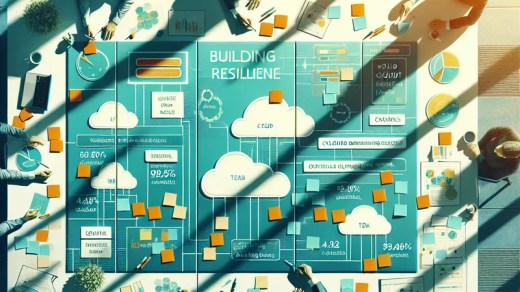
Resilience isn’t just a buzzword—it’s a necessity. Just ask anyone who’s been through a system outage that took hours to resolve. In one memorable incident, our cloud provider experienced downtime during a holiday sale. Our well-rehearsed disaster recovery plan kicked in, minimizing losses and saving the day.
A resilient infrastructure is built on redundancy, regular testing, and swift recovery protocols. Utilize Infrastructure as Code (IaC) to ensure configurations are consistent and repeatable. Here’s a basic example using Terraform for an AWS EC2 instance:
resource "aws_instance" "web" {
  ami           = "ami-0c55b159cbfafe1f0"
  instance_type = "t2.micro"

  tags = {
    Name = "MyWebServer"
  }
}
Regularly test failover scenarios and backup restoration processes. Conduct game days where you intentionally break systems to see how well they recover. You’ll find invaluable insights into potential vulnerabilities. Check out the AWS Well-Architected Framework for guidelines on building robust cloud solutions.
Encouraging Continuous Learning
In the fast-paced tech landscape, stagnation is the enemy. Back in 2016, our team decided to embrace Kubernetes, even though it was relatively new. This decision paid off, as Kubernetes quickly became an industry standard. The experience highlighted the importance of continuous learning.
Promote a culture where learning is part of the job description. Encourage certifications, workshops, and online courses. Allocate budget and time for employees to explore new skills. Make use of platforms like Coursera, Pluralsight, or even free resources on GitHub to stay updated with the latest trends and technologies.
Organize internal hackathons or “lunch and learn” sessions where team members can showcase what they’ve learned. Recognize and reward those who take initiative to expand their skillsets. By investing in your team’s education, you’re investing in your organization’s future.
Navigating Conflict with Confidence
Conflict is inevitable but manageable. In our early days, we had two engineers almost come to blows over a code review disagreement. Looking back, the tension could have been diffused with better communication strategies.
The key to navigating conflict is addressing it head-on, not avoiding it. Start by acknowledging that differences of opinion are natural and can lead to innovation. Schedule mediation sessions to facilitate open dialogue. Encourage each party to voice their perspectives while focusing on facts rather than emotions.
Utilize active listening techniques: paraphrase what you hear, ask clarifying questions, and validate feelings without necessarily agreeing with them. Establish clear ground rules for discussions, such as no interruptions and maintaining respect.
Consider bringing in a neutral third party if conflicts escalate. This could be an HR representative or a team member not directly involved in the dispute. By handling conflicts calmly and constructively, you model leadership qualities that foster a healthy work environment.
Conclusion: Leading Through Uncertainty
Leadership in tech is as challenging as it is rewarding. It involves a delicate balance of empathy, agility, feedback, resilience, continuous learning, and conflict resolution. Each component is crucial to building a cohesive team capable of overcoming obstacles and embracing opportunities.
Remember, leadership isn’t about having all the answers; it’s about guiding your team to find those answers together. By integrating these principles into your leadership style, you’ll be well-equipped to navigate the ever-evolving tech landscape with confidence and poise.



















And the recovery plan needs to account for the network path, not just the application tier. We had a failover exercise where the instances came up cleanly but a route policy sent return traffic through the old firewall, so every health check looked like random latency. In my job, the packet path and DNS TTLs are usually what turn a five-minute recovery into an hour. IaC helps, but only if firewall rules, load balancer settings, and upstream dependencies are represented and tested too. This may be more pronounced in a regulated company our size, where network changes have separate approval queues. Could you do a follow-up on testing network failover and routing policy during game days
“game days”? post on backup restores; theyre recovery tests, right?
the dashboard point gets lost in a lot of resilience conversations… we built an incident view with every k8s metric imaginable, then watched people ignore it because nobody could find the one signal that mattered. during a prod incident at my last job, the on-call engineer had three tabs open and still missed the queue depth alarm. lower MTTR is not helped by another panel, it is helped by showing the next decision without making people parse a wall of red. IaC has the same cognitive load problem when the PR is 900 lines of generated noise. i wish more game days included testing whether humans can actually operate the tooling… not just whether the tooling technically recovers
and this is why i dont buy dashboards as the answer, at my previous employer we added more panels after every incident and the on-call runbook got worse. test whether someone can find the next step in five minutes, not whether the grafana board looks complete.
My previous employer did retros in jira, but nobody wrote the awkward stuff down. how do you get people to raise conflict before it becomes a bigger problem?
Psychological safety is hard to infer from the number of check-ins or Slack support-channel messages. During a payroll outage at my last job, our Jira dashboard showed every incident task closed quickly, but Finance still had to run payments manually the next morning. We run Azure, Datadog, and ServiceNow now, and I would want recovery-time reporting tied to the actual business service, not just infrastructure alerts. The small Terraform detail matters too: an EC2 instance tagged Name is not proof that the application is recoverable. A game day should include whether people can find the runbook and make a decision without waiting for the usual expert. Otherwise the metric says the system recovered when the team merely worked around it.
the phrase “timely, specific, and actionable” is exactly what makes review feedback useful! we have found that vague requests in pull requests create more friction than the code changes themselves. at a small product company, we can pair quickly, but i know that does not scale neatly across large distributed teams. could you write a follow-up on making code review feedback and test expectations consistent?
game days at 3am… pls cover rollback toil too
And the IaC example is a helpful reminder that repeatable infrastructure still needs tight approval boundaries; a broad deploy role can expose far more than one EC2 instance. I would love to see secrets rotation included, since its easy to overlook who can approve access
i am not very technical, but the learning time part matters where i work. our previous employer expected people to study after work, and nobody really did. we run github actions now and i still get nervous when a workflow changes. could you explain how managers make room for learning without delaying regular work?
and how do you measure psychological safety without turning it into another score people optimize? at my previous employer, anonymous surveys said everything was fine while the data team stopped challenging deadline assumptions.
Psychological safety is not really a score, it is a condition, and anonymous surveys can miss the people who assume their answers arent anonymous. In a regulated company our size, approval chains can make that silence look like agreement.
I would want evidence beyond a survey… in our PostgreSQL estate, people stopped objecting to risky migrations when management tied every delay to the quarterly budget, that is not safety. In a small financial-services shop, headcount and approval pressure can make silence look very cooperative.
The Terraform example is harmless only until someone applies the same confidence to a database change. We had a Friday migration add an index to a large table, and the lock queue backed up until the checkout service began timing out. The rollback was not quick because the migration had already changed application expectations. Game days are useful, but I would include long-running migrations, replica lag, and restoring a backup to a point in time. In my job, the query that ruins the evening is often a perfectly reasonable query against production-sized data. How do you recommend practicing database failover without putting the primary at risk?